Demons
The Reincarnated Demon King's Host Just Wants to Live in Peace, But the Hero Won't Leave Him AloneDemons are a magically stratified people whose wars helped forge Algeya’s mortal alliance, but whose own society is organized around power rather than kinship. The hierarchy turns children into soldiers, makes mass killing a route to rank, and places the Demon King above even the Demon Lords. Through Malthios, the former Demon King whose soul survives in healer Theo, the story presents that order from within: first as a system that brutalizes its own young, then as a force that devastates mortal communities, and finally as an identity that need not determine every choice.
Society and Hierarchy
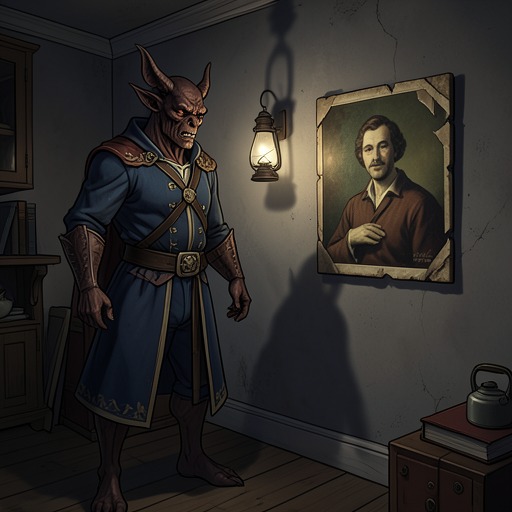
Demons have limited routes to greater power. Demonkin, the lowest group, possess little or no mana and can be trained as common soldiers. A Demon Lord may sponsor surviving children by giving them mana; those who receive it become Novices, whose magical potential varies but whose physical prowess makes them effective combatants. The gift can be agonizing: Malthios remembered receiving mana from the Demon Lord Fulton as one of the most painful experiences of his life. Novice training was harsh, and higher-ranking trainees looked down on him, even though the new rank brought regular meals and a bed.
Demon Lords rise through massive slaughter of innocents, gaining immense mana and wings. The Demon King is the highest rank, but the method of attaining it is known only to Demon Lords; unlike the more explicit route to Demon Lord status, this ascent also depends on whether the demon is worthy of the power. Malthios’s rule was therefore the culmination of a system that binds magical advancement to violence, while leaving its ultimate threshold partly secret.
This hierarchy is social as well as magical. Malthios did not remember his parents’ faces, and he understood demon society as one in which blood mattered less than power. His earliest memories were of pain, and the scars across his back remained a physical record of a childhood whose causes he did not understand. His parents abandoned him before he was six. He survived by stealing food in a demon village until Fulton collected the children who had survived his gift of mana and took them for Novice training. The order that offered Malthios shelter also demanded that he endure its cruelty.
War with Algeya
Malthios’s memories place demon violence against mortals in a long conflict. He believed the Demon King’s forces could have conquered the land before Hero Eliza and her companions defeated him. Before that defeat, he regarded mortals as a plague and took little satisfaction in the destruction around him; their pleas irritated him, and he questioned the value of lives he thought brief and purposeless. The burned village, its houses blackened and its people and animals caught in the slaughter, makes the consequences of that view concrete. Yet the scene also notes that mortals and demons bleed the same color, an image that unsettles the distance Malthios tries to place between them.
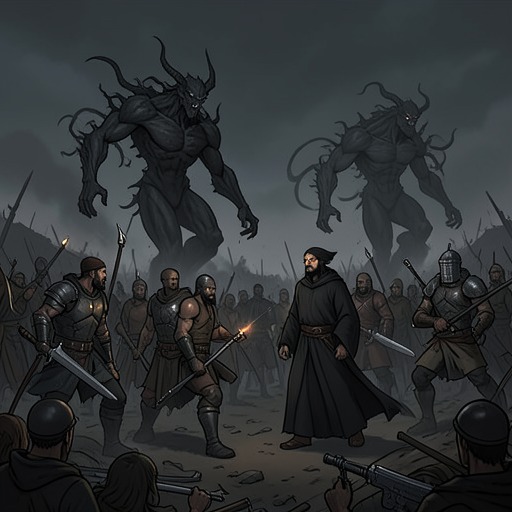
The war shaped mortal politics as well as demon rule. Algeya’s kingdoms were organized around the mortal races, with the Orcs more nomadic, while people could live across borders. Cooperation and shared laws were intended to prevent one race from suppressing another or a kingdom’s resources from being stretched too thin. That arrangement was made possible, ironically, by the common threat of demons: the mortal peoples united against them, and Malthios believed they would otherwise have fallen. After his defeat, remnants of the Demon King’s army remained scattered across the land under the remaining Demon Lords, so the Hero’s party continued to defend ordinary people.
The balance eventually shifted. Mortal populations and strength grew, and their kingdoms and alliances formed a united country. At the same time, Demonkin killed in Demon Lords’ attempts to become Demon King had not been replaced quickly enough. The Demon King’s castle and the far-northern territory around it remained the last safe region for demons, not because it offered a path to renewed conquest, but because mortals had no settlements there. Malthios recognized that the change in power left his own time limited.
Malthios and the Demon Army
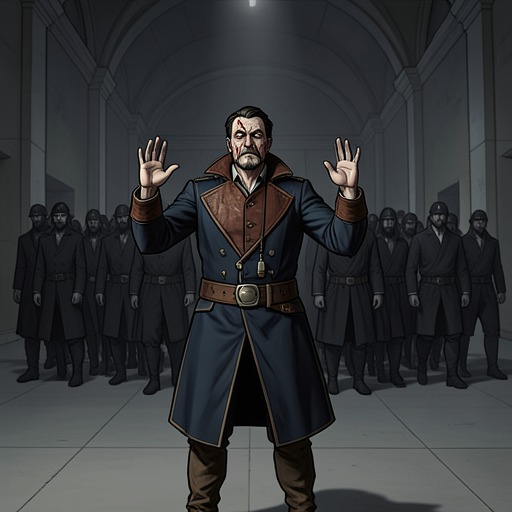
After Malthios became Demon King, he let his wish to crush the mortal races sustain his rule. He relied on generals: Tyraz, his ruthless right hand; Keplo, who commanded battalions firmly and level-headedly; and the assassins Luvel and Nissle, with Nissle specializing in poisons. Malthios often left the work to them, going out himself when restless or when a Hero might be present. A succession of Heroes had burned themselves out fighting Novices or Demon Lords, and Malthios had not yet faced one himself.
That command structure did not make the army invulnerable. When Hero Eliza’s party entered demon territory, scouts failed to return, including Luvel and Nissle. The mortal coalition pressed closer even as Malthios’s generals maintained the war. The account of his rule thus joins personal authority to collective vulnerability: a powerful King could delegate violence, but he could not halt the growth and cooperation of the people he meant to defeat.
Rebirth and the Limits of Inherited Identity
Before dying, Malthios cast a spell intended to carry his soul into another body so that he could survive and continue his reign. The spell worked, but its new host was a human child, Theo. Malthios first experienced the rebirth as darkness, restricted movement, and thoughts and feelings that belonged to someone else; he could see through the child’s eyes and, as a baby, could do little more than reach for the braid of the woman leaning over him. His first greeting framed the child as a host for future conquest, but the shared body placed the former enemy of mortals inside the life of a healer.
The story’s later conflicts keep the danger of the demon past present without making Theo identical to it. When Eliza’s party encounters him, Theo has been assigned the role of healer in the Hero’s party because of his exceptional magic. Eliza invokes family as a reason to watch over him, while Theo answers that her actions made him into a weapon. Later, court orders subject him to magical restraints, and his fate becomes a matter for Hero Luca to decide. These moments show that the human institutions built to resist demons can also claim and control a child’s body in the name of duty.
Demons therefore function as both a military enemy and a political mirror. Their hierarchy openly turns power into entitlement and young lives into instruments of war; the mortal response, though organized around protection, can also conscript and confine. Malthios’s history gives that contrast its human scale: he was abandoned, brutalized, and taught to value power, then became the ruler of the violence that had shaped him. His rebirth in Theo does not erase the devastation of his reign, but it makes inherited identity a conflict rather than a verdict.